Gastric Cancer Screening
Who should get screened for ?
Experts do not recommend screening for healthy people at average risk of stomach cancer. In people at high risk of stomach cancer, screening is only recommended for certain people based on their:
- age
- gene mutation
- family history of cancer
- personal medical history
Read below for the guidelines for screening listed by gene mutation.
Symptoms of gastric cancer
All high-risk people should be aware of the symptoms of . You should report any of the following persistent symptoms to your doctor:
- belly pain or cramps that don't go away
- feeling bloated or full after eating small amounts of food
- not feeling hungry when you would expect to be hungry
- heartburn, indigestion, nausea or vomiting
- losing weight without trying
- black stools
The symptoms listed above can be caused by many things, including . Your doctor can run additional tests to try to determine the cause of your symptoms. Not all stomach cancers cause symptoms, which is why screening is so important.
Upper endoscopy and random biopsy
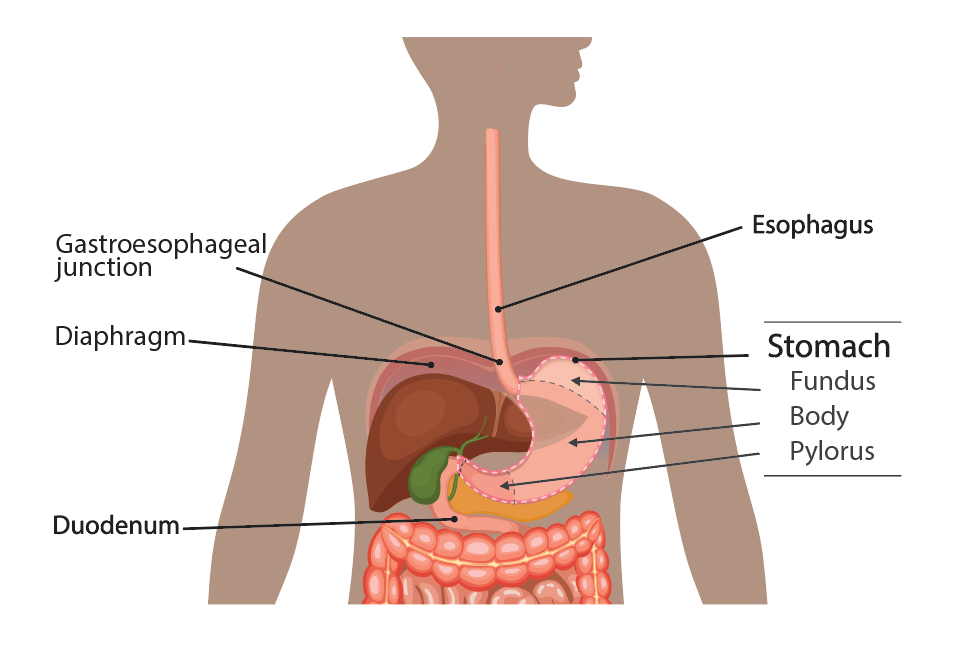
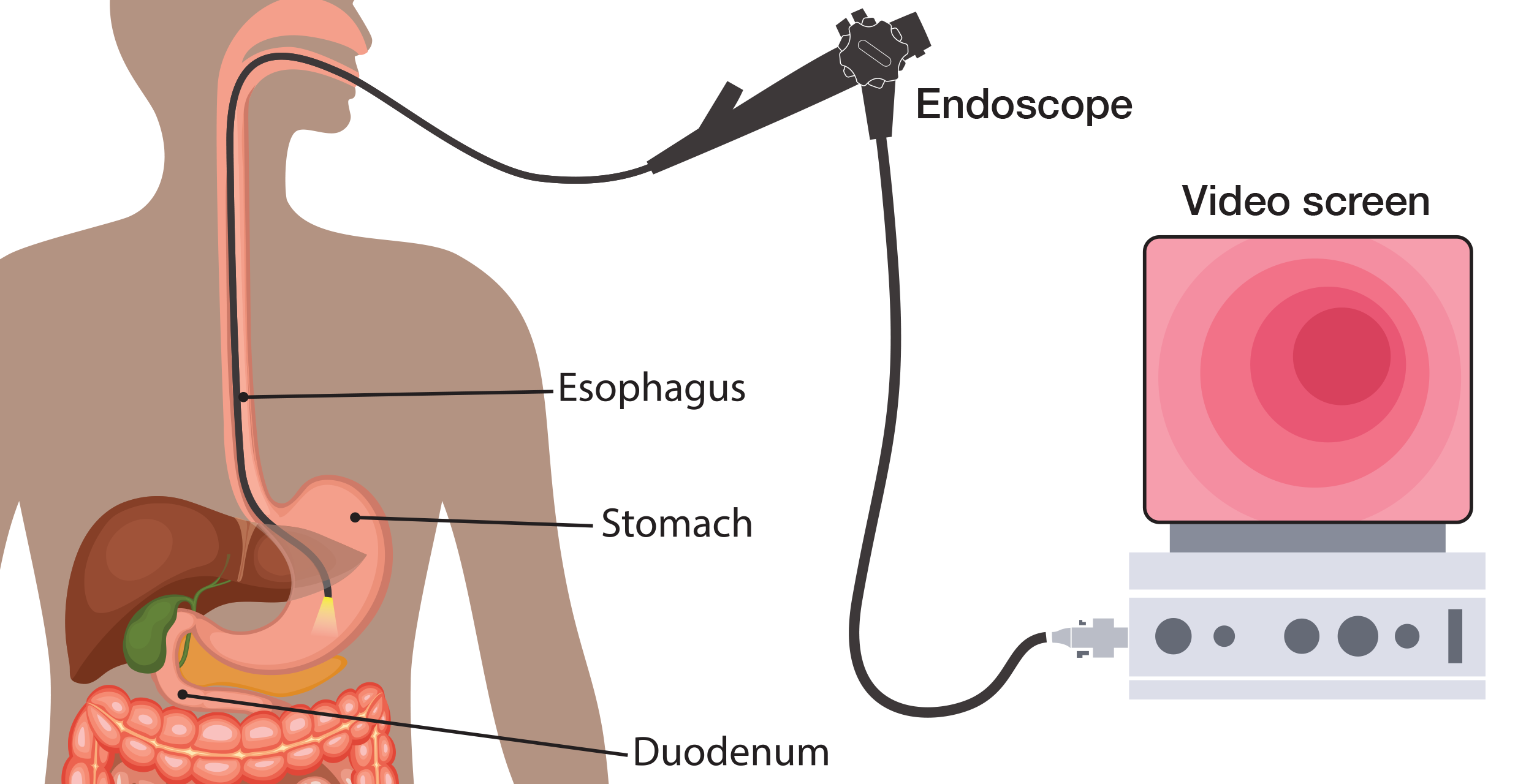
Upper endoscopy (also called esophagogastroduodenoscopy or EGD), is the screening most used for high-risk people. EGD allows doctors to look for abnormalities in the upper gastrointestinal tract, including:
- esophagus
- stomach
- duodenum (first part of small intestine)
This procedure is performed under anesthesia. A doctor passes a long, thin, flexible tube with a camera called an endoscope through the mouth into the esophagus, stomach and the duodenum in order to look for growths or other abnormalities. If an abnormality is found, a biopsy (small sample of tissue) is usually taken. Small instruments can be inserted through the endoscope to collect these biopsies.
In some situations this screening may also include taking random biopsies of the stomach. For this procedure, small tissue samples are taken from different areas—even if the stomach looks normal.
Biopsy samples are examined by pathologists to look for abnormal cells and evidence of cancer. The tissue can also be tested for infection with , a bacteria known to increase the risk for .
Screening for diffuse gastric cancer
Diffuse (also called signet ring cell cancer) can be very hard to find early. Instead of forming a lump, these cancers grow as tiny cells that spread throughout the stomach lining, so they may not be visible during an endoscopy. This type of cancer is most common in people with inherited mutations such as or CTNNA1.
For people at high risk who choose screening, experts recommend EGD with random biopsies of the stomach. During this procedure:
- The doctor carefully examines the stomach.
- Many small tissue samples (biopsies) are taken from different areas—even if the stomach looks normal.
The samples are sent to a pathologist, who looks under a microscope for abnormal cells known as signet ring cancer cells, which are too small to be seen during the procedure itself.
Endoscopy with random biopsies has limits. It can miss finding cancers early because diffuse cells may be tiny and scattered. Most of the cancers found in people with these mutations are early cancers (called pT1a). Only a small portion (about 1 in 10) of these early cancers are expected to become life-threatening advanced cancers. This makes decisions about screening versus surgery more complex.
Risk-reducing gastrectomy (surgical removal of the stomach) is the most effective way to prevent this cancer in people at very high risk. However, it can have lifelong effects and requires major changes in eating and daily life.
Because each option has benefits and risks, people with these mutations should be cared for by specialists and take part in shared decision-making with their doctors. Together, they can weigh the limits of screening, the chance of slow-growing disease, and the impact of surgery to decide what is right for them.
Importance of screening
Stomach cancer tends to develop slowly over many years. Before cancer develops, pre-cancerous growths or may occur in the lining of the stomach. Although many pre-cancerous changes will never turn into stomach cancer, some may become cancer. These early changes rarely cause symptoms, so they often go undetected. The goal of stomach cancer screening is to find pre-cancerous growths and remove them before they have the chance to turn into cancer. If cancer has already formed, early detection can still help improve a person’s chance of detecting cancer at an earlier, more treatable .
The approach to screening differs by gene. People at high risk for diffuse have different guidelines than people with . See below for more details about screening for each.
Testing for H. pylori
Helicobacter Pylori () is a type of bacteria that attacks the lining of the stomach. Most infections occur in childhood. New infections are less common in adults.
People with infection often do not have any symptoms, but some may experience inflammation of the stomach and ulcers. Long-term infection with can lead to stomach cancer.
Doctors can test for using:
- stool tests.
- breath tests.
- tissue samples collected during endoscopy.
If H pylori is present, people with this bacterial infection can be easily treated with antibiotics. Successfully treating infections can reduce stomach cancer risk. It is important to confirm that the infection has been completely eradicated after finishing the treatment course.
Gastric cancer screening guidelines
Screening guidelines for high-risk people involve an upper endoscopy. The recommended age for beginning screening depends on the gene mutation and, in some cases, personal or family history of cancer or history of . The NCCN guidelines include screening recommendations for people with inherited mutations in the genes listed below.
|
Gene |
Beginning Age |
Screening Details and Frequency |
|
20-25 (or earlier, based on family history) |
EGD. Frequency depends on number, size, and type of found. See (FAP/AFAP) risk-management page for more extensive information. |
|
|
15 |
EGD every 12 months. See (GAPPS) risk-management page for more extensive information. |
|
|
Baseline between 12-15 years |
EGD. If are found at baseline before 18, repeat every 2-3 years. If no are found at baseline before 18, resume at age 18 and continue every 1-3 years depending on findings. See BMPR1A risk-management page for more extensive information. |
|
|
, CTNNA1 |
No set age. Discussion of pros and cons of screening and surgery followed by a shared decision based on personal and family cancer history and patient preference. |
EGD with random biopsy every 6-12 months. See and CTNNA1 risk-management for more extensive information. |
|
30 - 35 (or earlier based on family history). |
EGD with random biopsy at baseline. Repeat EGD every 2-4 years or more frequently based on findings. See , , , and risk-management pages for more extensive information. |
|
|
MUTYH (MAP) |
30-35 (or earlier, based on family history) |
EGD. Frequency depends on number, size, and type of found. See MUTYH (MAP) risk-management page for more extensive information. |
|
18 |
EGD. If are found at baseline before 18, repeat every 2-3 years. If no are found at baseline before 18, resume at age 18 and continue every 1-3 years depending on findings. See SMAD4 risk-management page for more extensive information. |
|
|
8-10 |
EGD. Before 18, if are found at baseline repeat every 2-3 years. If no are found at baseline, resume screening at age 18. Repeat EGD every 2–3 years, or more frequently depending on number, size and type of found, signs of blood loss or bowel abnormalities. (See risk-management page for more extensive information). |
|
|
20-25 (or earlier, based on family history) |
EGD every 2–5 years. (See risk-management page for more extensive information). |
|
|
Source: NCCN Guidelines: Genetic/Familial High-Risk Assessment: Colorectal, Endometrial, Gastric v. 1, 2026. |
||
More Resources
Hear Stories from the Community



Visit our Partners
GI Cancers Alliance
An alliance of GI cancer organizations working together to raise awareness, provide education, and keep the patient voice central to advocacy.
Hope for Stomach Cancer
Providing resources to patients, caregivers and loved ones while promoting early detection and prevention to the general and medical communities.
No Stomach for Cancer
Supporting research and uniting the caring power of people worldwide affected by stomach cancer.