Portal: Breast Cancer, Categories Screening
Search Results for Portal: Breast Cancer, Categories Screening



Relevance: High
Most relevant for: People concerned about their breast cancer risk who are considering genetic testing to guide breast screening
Study: Genetic testing can help identify who needs high-risk breast screening
Researchers in the WISDOM Study looked at women who had genetic testing and had an inherited mutation in a gene linked to increased breast cancer risk. When only risk factors other than genetic testing were considered, high-risk screening would not have been advised for most of these women. These results highlight how important genetic testing is to identify many women who need additional breast cancer screening. (posted 10/16/2026)
READ MORE ›

Relevance: Medium-High
Most relevant for: People who have had or are considering liquid biopsy testing
Topic: What patients need to know about liquid biopsies in cancer care
Liquid biopsies are tests that look for signs of cancer in blood or other body fluids. These signs can include cancer cells that have broken away from a tumor, pieces of cancer cell DNA and proteins or other biomarkers found in cancer cells. Liquid biopsies can be used to screen for cancer before a cancer diagnosis or guide treatment after a diagnosis. (posted 2/6/26)
READ MORE ›
Relevance: Medium
Most relevant for: People with BioZorb markers in breast tissue. People who will have a lumpectomy. People interested in cancer-related podcasts.
Update: News from the FDA: Updates on breast cancer treatment
The FDA updates the risks of using BioZorb Markers and approves a new imaging drug for breast cancer. (Posted 8/16/24)
Este artículo está disponible en español.
READ MORE ›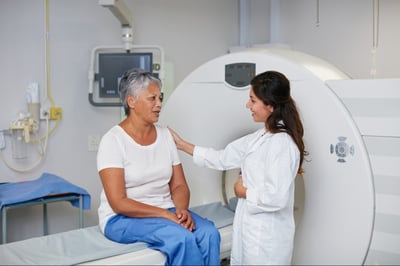
Relevance: Medium-High
Most relevant for: People with a BRCA1 or BRCA2 mutation who are considering breast MRI screening
Study: Yearly breast MRI screening improves outcomes for women with inherited BRCA mutations
An international research study of yearly breast MRI screening among women with BRCA1 and BRCA2 gene mutations found that BRCA1 carriers who had MRI screenings were less likely to die of breast cancer than those who did not. Additional studies with more BRCA2 mutation carriers are needed to determine if yearly breast MRIs reduce deaths from breast cancer in this group. (Posted 6/24/24)
Este artículo está disponible en español.
READ MORE ›
Relevance: Medium
Most relevant for: People with HR-positive and HER2-negative metastatic breast cancer. People with silicone breast implants. People considering thermography screening
Update: News from the FDA– new breast cancer treatment, thermography warning and implant screening updates
This XRAY review is a summary of FDA breast cancer updates from July to December 2023. This includes a new drug approval and two consumer updates. (Posted 2/21/24)
Este artículo está disponible en español.
READ MORE ›
Relevance: Medium
Most relevant for: Transgender women with inherited mutations who are considering or have had gender affirming care
Article: Breast cancer risk for transgender women with inherited mutations
There has been little research on breast cancer risk for transgender women who are at high risk for breast cancer due to an inherited mutation. This review summarizes what we know. (Posted 11/29/23)
Este artículo está disponible en español.
READ MORE ›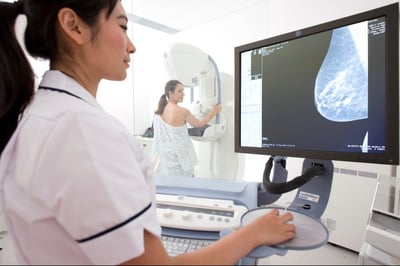
Relevance: Medium-High
Most relevant for: People interested in the use of artificial intelligence in medicine
Article: Artificial intelligence (AI) may find breast cancer on mammograms sooner
Artificial intelligence (AI) tools may help doctors read mammograms. This assistance may lead to earlier diagnoses of breast cancer. (Posted 9/29/23)
Este artículo está disponible en español.
READ MORE ›
Relevance: Medium-High
Most relevant for: People who have mammograms
Guideline: What is breast density and why does it matter?
New FDA guidelines for mammograms will go into effect by September 2024. Current FDA guidance requires hospitals and breast centers to give people information about their breast density with their mammogram results. By September 2024, mammogram providers will need to relay to patients who have dense breast that they should discuss the need for additional imaging. This article provides an overview of what breast density means and why it matters. (Posted 6/8/23)
Este artículo está disponible en español.
READ MORE ›
Relevance: High
Most relevant for: People with a CDH1 mutation or a family history of stomach cancer
Article: A food lover’s decision to remove her stomach highlights difficult decisions around cancer risk
National Public Radio reporter Sáša Woodruff shares her story of learning about her CDH1 mutation and making a decision about risk-reducing surgery. Mutations in the CDH1 gene significantly increase a person’s risk of stomach and breast cancers. Woodruff’s personal essay describes the psychological challenge of making decisions about risk-reducing surgeries and draws attention to a lesser-known mutation linked to hereditary cancer. (Posted 5/17/23)
Este artículo está disponible en español.
READ MORE ›
Relevance: High
Most relevant for: Americans Indians and Alaska Natives
Topic: Cancer disparities in American Indian and Alaska Native populations
The American Cancer Society released a special section in their 2022 Cancer Facts & Figures report that discussed cancer disparities in American Indian and Alaska Native populations in the United States. This review highlights the special section’s main points, including disparities in cancer screening, diagnosis and survival rates in native communities, as well as factors contributing to those disparities. (Posted 12/20/22)
Este artículo está disponible en español.
READ MORE ›