Breast Surgery: Lumpectomy, Mastectomy & Reconstruction

Types of Breast Surgery
Breast surgery may be used to diagnose, treat or prevent breast cancer. The main types of breast surgery include:
- is surgery to remove a tumor in the breast. For people diagnosed with breast cancer, is often followed by radiation. Other names for include "partial mastectomy," "breast-conserving surgery," and "excisional biopsy."
- Mastectomy is the removal of one or both breasts. Mastectomy may be used for treatment or prevention of breast cancer.
- are often removed at the time of or mastectomy in people diagnosed with cancer to see whether, and how much the cancer has spread.
- Breast reconstruction is used to recreate the shape of breasts after mastectomy or .
- Aesthetic flat closure is a surgical technique used with mastectomy that removes excess skin to create a smooth, flat chest for people who choose not to have breast reconstruction.
or Mastectomy?
Who is a candidate for ?
Most people diagnosed with breast cancer are candidates for with radiation. is a less extensive surgery than mastectomy and the recovery is often quicker.
Who is a candidate for mastectomy?
For people diagnosed with breast cancer, the decision between mastectomy and is a personal one. Those who may benefit from mastectomy include:
- People with inherited mutations linked to an increased risk for another breast cancer diagnosis.
- People with anxiety about a new breast cancer diagnosis.
- People with large cancers or multiple areas of cancer in the breast.
- People who are not able to undergo radiation therapy.
- Men with breast cancer.
For people who have not been diagnosed with breast cancer, guidelines on risk-reducing mastectomy vary by gene and situation. Visit our page on breast reconstruction for more information on these guidelines.
Types of mastectomy
|
Type of Mastectomy
|
Description
|
Additional Information |
|
Modified radical mastectomy |
Removes the entire breast and includes “axillary dissection” (removal of the from the armpit).
|
Used to treat breast cancers that are larger, aggressive and involve multiple . |
|
Simple mastectomy |
Removes the entire breast but does not include axillary dissection. However, a limited number of axillary , known as sentinel nodes, may be removed with a simple mastectomy.
|
Used to prevent or treat breast cancers in people for whom skin-sparing mastectomy is not an option. |
|
Skin-sparing mastectomy |
The breast tissue is removed, but most of the breast skin is saved to hold and shape the reconstructed breast. The nipple and areola may be removed or the nipple may be removed with the areola preserved.
|
Commonly used for risk-reducing mastectomy when immediate reconstruction is planned. Skin-sparing mastectomies may also be used to treat cancers. Skin-sparing mastectomies do not increase the risk for breast cancer recurrence in patients with breast cancer. |
|
Nipple-sparing mastectomy |
A type of skin-sparing surgery that leaves the areola and nipple intact. There are several different options for incision placement, and this may depend on the patient’s breast size, type of reconstruction planned, and desired size after surgery.
|
Commonly used for risk-reducing mastectomy when immediate reconstruction is planned. Nipple-sparing mastectomies may also be used to treat cancers that don't involve the nipple or areola. |
|
Goldilocks mastectomy |
A type skin-sparing mastectomy where the surgeon removes the breast tissue and then rearranges the breast skin and underlying fat to create a small breast mound. Results tend to be better for patients with very large breasts who have more fat to work with. No additional surgeries are required, although later fat grafting (an outpatient procedure) can improve volume and contour. |
For people who don’t want a completely flat chest after mastectomy but also don’t want (or can’t have) breast reconstruction. This procedure may be as safe as other skin-sparing mastectomies. However, no large, long-term studies have looked at appropriate candidates, specific risks or long-term safety of this procedure. Not all breast surgeons, general surgeons or surgical oncologists offer the Goldilocks procedure, so it is important to ask about a surgeon’s experience with this procedure. |
Reconstruction or No Reconstruction
What are the options after mastectomy?
After a mastectomy, you may choose to leave your chest flat or have breast reconstruction surgery to restore the shape of one or both breasts. This is a personal decision, and there is no right or wrong choice.
Choosing whether to have reconstruction is only one of several decisions you may face after a mastectomy. People considering reconstruction can choose from several approaches, each with its own benefits, limitations, risks, recovery time, and cosmetic outcomes. Learning about the available options, including the option to remain flat, can help you make an informed decision that best fits your goals, lifestyle, and preferences. Discuss your options with your healthcare team to understand what each approach may involve.
Choosing whether to have reconstruction, and if so, which type of reconstruction is right for you, can feel overwhelming. FORCE offers several resources to help you explore your options and prepare for conversations with your healthcare team. Start with FORCE's Considering Mastectomy with or without Reconstruction decision guide, which can help you prepare for surgical appointments and make informed decisions. If you would like to see real-world results from different approaches, visit FORCE's secure Post-Mastectomy Gallery, which includes photos and videos shared by people who have undergone mastectomy with and without reconstruction. You can find support and community through FORCE's dedicated Mastectomy Preparation and Recovery support meetings. For more in-depth information, consider reading The Complete Guide to Breast Reconstruction by Kathy Steligo.
Breast Reconstruction Options
What is breast reconstruction surgery?
After mastectomy, the chest area can be reconstructed to restore the shape and appearance of breasts. Breast reconstruction can be done using implants, your own living tissue or a combination of the two. The Complete Guide to Breast Recontruction by Kathy Steligo is a comprehensive resource to help you understand all of your options and make decisions. Visit our password-protected photo and video gallery to view real outcomes shared by community members or to upload your own photos or videos to share with others.
Most reconstruction involves two or more operations over several months.
The initial surgery forms the breast mounds (breasts without nipples).
A shorter surgery later refines the shape and size of the new breasts and (if needed) creates nipples.
Tattooing adds color to the nipples, simulates the areolas and completes the reconstructive process.
Reconstruction with breast implants
Most breast reconstruction involves implants that are filled with soft, thick silicone gel (saline implants are used less often). Implants may be placed under or over the pectoral chest muscle. Implants are not lifetime devices and eventually must be replaced.
Implant procedures include:
Expander-to-implant reconstruction: A temporary expandable implant is placed into a pocket under the chest muscle and is then gradually inflated over a few weeks in a plastic surgeon's office. Expansion stretches the chest skin and muscle until the pocket is large enough to fit the desired implant. A shorter surgery then replaces the expanders with implants that best fit the chest anatomy and desired size.
Direct-to-implant reconstruction (also known as "one-step"): Nipple-sparing mastectomy and reconstruction can be completed in a single operation. This is known as "direct-to-implant" breast reconstruction. A full-sized implant is secured into place, so no expansion is needed. With this reconstruction, the implants may be placed under or over the muscle, depending on patient and surgeon preferences.
Textured breast implants have been linked to a very rare cancer known as Breast Implant-Associated Anaplastic Large Cell or BIA-ALCL. For this reason, the recalled certain textured implants (see full list of devices here) and surgeons in the U.S. may no longer use them. Currently, the does not recommend removing textured implants unless someone has symptoms of BIA-ALCL or other complications.
Screening for breast implant rupture
The recommends periodic imaging (e.g., , ) of silicone gel-filled breast implants to screen for implant rupture. Implants must be labeled with this recommendation. Patients with these implants should have an or 5-6 years after their initial implant surgery and every 2-3 years thereafter, even if they have no symptoms. The also recommends that anyone who has symptoms at any time or uncertain results for breast implant rupture should undergo a breast .
Tissue Reconstruction
Breasts can be reconstructed using excess fat, skin, and/or muscle removed from the tummy, hips, back, buttocks or thighs. This is known as "autologous breast reconstruction."
Older techniques, including and Latissimus Dorsi, remove muscle from the donor site, which can lead to pain or muscle weakness. Newer techniques, known as "perforator flaps" include , PAP, SIEA, GAP, TUG and others. These methods produce similar cosmetic results using only fat and skin and sparing the muscle. These muscle-sparing methods require a specially trained microsurgeon who connects blood vessels in the to blood vessels in the chest. The overall timeframe for completing reconstruction is shorter than breast reconstruction with tissue expansion, but it is more invasive and requires longer surgery and recovery times. Unlike breast implants, tissue flaps last a lifetime without needing to be replaced.
Fat Grafting
Fat grafting (also called fat transfer) is a breast reconstruction technique that uses a person's own fat to improve or rebuild the breast after a mastectomy. Fat is removed from the abdomen, thighs, hips, or buttocks using liposuction and then injected into the breast area. It may be used after reconstruction to fill in uneven areas, improve the feel, or restore volume that may be lost over time. Some people need more than one fat-grafting procedure to achieve their desired outcome.
In some cases, fat grafting can be used to rebuild part or all of a breast after mastectomy. This approach may involve multiple procedures performed over time to gradually create the desired breast shape and size. Newer techniques may combine fat grafting with an absorbable tissue-support structure (scaffold) that helps create space for the transferred fat and supports the developing breast shape while new blood vessels grow into the area. This approach may offer an alternative for some people who are not candidates for implants or traditional reconstruction.
Nipples and areola
People who do not have nipple-sparing mastectomy may choose to have nipple reconstruction nipple and areola tattooing. Visit our password-protected photo and video gallery to view real outcomes shared by community members or to upload your own photos or videos to share with others.
Nipple reconstruction
Nipple reconstruction is a short and simple procedure that creates a small of breast skin into the shape of a nipple. This surgery is usually done after the reconstructed breast has settled into position, about three or four months after surgery. Other people may choose to skip this reconstructive step, because reconstructed nipples have no sensation and do not react to cold or touch as natural nipples do. For women who decide to skip this step, some may choose 3-D nipple tattooing or temporary adhesive nipples.
Nipple and areola tattooing
Tattooing adds color to the new nipple and recreates the look of the areola. Tattoos may be performed by the surgeon, a specially-trained nurse or technician or a professional tattoo artist who is experienced with reconstructive tattooing. Depending on the procedure, multiple sessions may be required. Tattoos may fade over time, but they can be repeated if necessary. 3-D tattooing produces deeper variations of pigment to simulate the look and texture of a natural nipple and areola. This is best performed by a skilled tattoo artist who is experienced with this procedure.
A great breast reconstruction resource is The Complete Guide to Breast Reconstruction by Kathy Steligo.
No Reconstruction: going flat after mastectomy
What are the reasons to go flat?
You may choose not to reconstruct because you:
- want to avoid additional surgery.
- want to return to your normal routine as quickly as possible.
- prefer, or are comfortable with the idea of a flat chest.
- are undecided about reconstruction at the time of mastectomy.
- have a health condition that precludes additional surgery.
- need radiation after mastectomy. (For reconstruction after radiation, the plastic surgeon can insert and inflate a tissue expander after mastectomy to preserve the breast skin and shape for later reconstruction—this is called a “delayed-immediate” procedure).
What happens when you go flat?
If you choose to go flat, the breast tissue and most of the breast skin is removed, leaving the chest flat or slightly concave. The incision will typically run across the middle of the chest. It may be possible for you to have nipple sparing mastectomy, even if you choose not to reconstruct. Make sure to ask your surgeon for an "aesthetic flat closure" as defined by the National Cancer Institute so they understand you want a smooth, comfortable flat chest with no extra skin left behind.
You can change your mind about going flat and undergo delayed reconstruction with tissue or implants at any time in the future.
Using prostheses
Some people who go flat like to wear breast-shaped forms (prostheses) that adhere to the chest or can be tucked into specially-made bras, camisoles, lingerie and swimsuits to temporarily restore their natural shape and profile. Prostheses come in a variety of shapes, sizes, textures, weights and with or without nipples. Customized silicone prostheses are the most realistic and the most expensive. Prostheses can be especially helpful after unilateral mastectomy to better fit into clothing and restore balance. A qualified fitter can help you find the right prostheses that fits your chest properly.
Goldilocks mastectomy
If you don’t want a completely flat chest after mastectomy but also don’t want (or can’t have) breast reconstruction, you might consider a Goldilocks mastectomy. It is a skin-sparing mastectomy—the surgeon removes the breast tissue and then rearranges the breast skin and underlying fat to create a small breast mound. Results tend to be better for patients with very large breasts who have more fat to work with. No additional surgeries are required, although later fat grafting (an outpatient procedure) can improve volume and contour without the need for breast implants or donor sites.
You may choose to keep your nipples and areolas if they are clear of cancer cells, although they may flatten or look and feel differently. Other options would be to have them reconstructed or tattooed onto your breast mounds or simply leave your breast mounds without nipples.
The Goldilocks procedure may be as safe as other skin-sparing mastectomies. However, no large, long-term clinical studies have identified appropriate candidates, specific risks or shown long-term safety data.
Not all breast surgeons, general surgeons or surgical oncologists offer the Goldilocks procedure, so it is important to ask about a surgeon’s experience with this procedure. Ask to see photos of their Goldilocks patients, and discuss what you can expect in terms of the surgery, recovery and results.
Preparation and Recovery
You can take steps to help you prepare for and recover from or mastectomy with or without reconstruction.
What to expect after surgery
- After surgery, most of your chest will be numb and may feel heavy. You may feel a pulling sensation under your arms as you recover; this will improve as your chest heals. It's important to take pain medications as prescribed, and tell your doctor if the medications are not controlling your pain.
- Most people remain in the hospital at least overnight. The length of your hospital stay will depend on whether you choose to go flat or reconstruct and which type of procedure you have.
- You may have surgical drains to reduce the build-up of fluid in your chest. Your nurse will explain how to empty your drains. The temporary drains will be removed once your body stops producing fluid (usually 1-3 weeks).
- Average recovery time after mastectomy with reconstruction is about 3-4 weeks but may be 6-8 weeks. During that time, you may be restricted from driving and activities that involve lifting or raising your arms over your head.
|
Factor |
Effect on Recovery |
|
Going flat |
|
|
Reconstruction |
|
|
Quitting smoking |
|
|
Physical therapy |
|
Surgical risks and complications
Every surgery has potential risks; some are more serious than others. Some mastectomy and reconstruction risks can affect recovery. Others can affect the type of scarring and appearance of the reconstructed breast. Some possible risks include:
- Infection
- Fluid build-up at the surgical site (seroma or hematoma)
- Delayed healing
- Blood loss
- Blood clots
- Blood supply issues that cause damage to or the loss of a
- Pain (post-operative and long-term pain syndromes)
Long-term and late-onset effects and complications
Late-onset complications and long-lasting changes may occur after mastectomy with or without reconstruction, including the following:
- Lack of feeling in the breast or chest or sensation that occurs because nerves are severed when breast tissue is removed. The chest (with or without reconstruction) is usually permanently numb after mastectomy. Some options may be available to spare nerves during mastectomy or restore sensation after mastectomy.
- Postmastectomy pain syndrome is a long-term complication of nerve damage during mastectomy that leads to persistent pain, tingling or phantom itching in the chest, armpit or arm. It is more likely to happen after radiation or when are removed during mastectomy. Treatment is available for this complication but might require a specialist.
- Capsular contraction (hardening of the scar tissue around an implant) can occur at any time after implant reconstruction. Treatment usually involves removing and replacing the implant.
- Implant movement or rupture requires additional surgery to fix the pocket, remove the implant or replace an implant.
- Breast Implant Associated Anaplastic Large Cell or BIA-ALCL is a very rare cancer that has been linked to breast implants. Although the cancer is rare, the recalled Allergan BIOCELL textured implants and expanders (see full list of devices here). Read more about BIA-ALCL here.
Some experts believe that breast implants may also increase the risk for certain immune-mediated diseases, but research has not proven a link. More research is needed to learn if there is a relationship between breast implants and these illnesses.
It is important to discuss the possible surgical risks and long-term complications with your surgeon to understand the seriousness and likelihood of these risks before making decisions about surgery and reconstruction. Consider getting a second opinion on the best way to resolve serious complications or unsatisfactory results.
Screening for breast implant rupture
The recommends periodic imaging (e.g., , ) of silicone gel-filled breast implants to screen for implant rupture. Implants must be labeled with this recommendation. Patients with these implants should have an or 5-6 years after their initial implant surgery and every 2-3 years thereafter, even if they have no symptoms. The also recommends that anyone who has symptoms at any time or uncertain results for breast implant rupture should undergo a breast .
Tips to prepare for and recover from surgery
You can take steps to prepare for and recover from mastectomy with or without reconstruction. Before surgery, many people:
- Prepare frozen meals or arrange for meal delivery to minimize the need for cooking.
- Move frequently used items to lower shelves.
- Arrange for rides to follow-up appointments or to pick up children from school.
- Purchase pillows to improve comfort while resting or sleeping.
- Ask their surgeon for a referral for post-operative physical therapy.
FORCE has a mastectomy checklist with a more complete set of tips written by experts and people who have undergone the procedure.
After a mastectomy, fluid can build up in the area where breast tissue was removed. To prevent this, surgeons often place drains—thin tubes connected to small bulbs that collect fluid outside the body. After surgery, many people go home with drains and are given instructions on how to empty them. The number of drains and how long they remain in place depends on the type of surgery and whether breast reconstruction was performed.
Most drains are removed once the amount of fluid they collect drops to a safe level. This often takes 1 to 3 weeks, although recovery times vary. Drain removal is usually a quick procedure done during a follow-up office visit.
Recovery times after mastectomy vary depending on several factors including whether or not there will be reconstruction and the type of reconstruction chosen.
Average recovery time after mastectomy and reconstruction is about 3-4 weeks, but full recovery may take up to 6-8 weeks.
Return to simple activities, such as lifting your arms above your head, may take 1-2 weeks. Many people will be able to return to exercise and full activity by 6 weeks after surgery.
Physical therapy may help to restore range of motion, decrease discomfort and reduce buildup of scar tissue.
There is no single "best" reconstruction option for everyone. Each approach has its own benefits, risks, limitations, recovery considerations, and cosmetic outcomes. The best choice is one that reflects your personal goals, preferences, overall health, and treatment plan. Working closely with your healthcare team can help you understand your options and make the decision that is right for you.
Very rare types of cancer have been linked to certain types of breast implants known as a textured breast implants (especially textured silicone implants). Since an recall in 2019, these implants are no longer used in the U.S. The risk for these cancers is very low.
Breast implant illness (BII) is a term used to describe a range of symptoms that some people report after receiving breast implants. These symptoms may include fatigue, brain fog, joint or muscle pain, hair loss, anxiety, depression, and other symptoms affecting different parts of the body. BII has been reported with both silicone and saline implants.
Researchers are continuing to study whether these symptoms are related to breast implants. At this time, BII is not recognized as a formal medical diagnosis, and there is no specific test to diagnose it. Some people report that their symptoms improve after implant removal. Talk with your doctor if you have breast implants and are experiencing symptoms that concern you.
Preparation and Recovery Support
Attend our dedicated Mastectomy Preparation and Recovery online support group meeting.
Checklist and Tip Sheet
View questions to help you make medical decisions and tips to help you prepare for and recover from surgery.
Photo and Video Gallery
View images and videos of mastectomy with and without reconstruction shared by members of the FORCE community.
Go Behind the Headlines
Force's XRAY program shares easy-to-understand information on the latest cancer research.
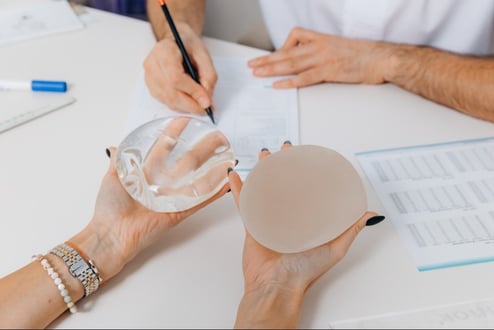
Study : Possible link between BRCA1 and BRCA2 mutations and rare breast implant-associated lymphoma
The causes of breast implant-associated anaplastic large cell lymphoma (BIA-ALCL), a rare cancer that develops...
Study : Male breast cancer: Patient and surgeon experiences
By surveying male breast cancer patients and the surgeons who treat them, researchers gained insight...

Study : Patient outcomes and experiences of going flat
Some patients with early-stage breast cancer or those considering risk-reducing surgery may choose mastectomy without...
Participate in Research

Stories from Our Community

Regaining Breast Sensation After Mastectomy
May 13, 2021
December 07, 2020
January 22, 2019