PUBLISHED: 28th February 2026
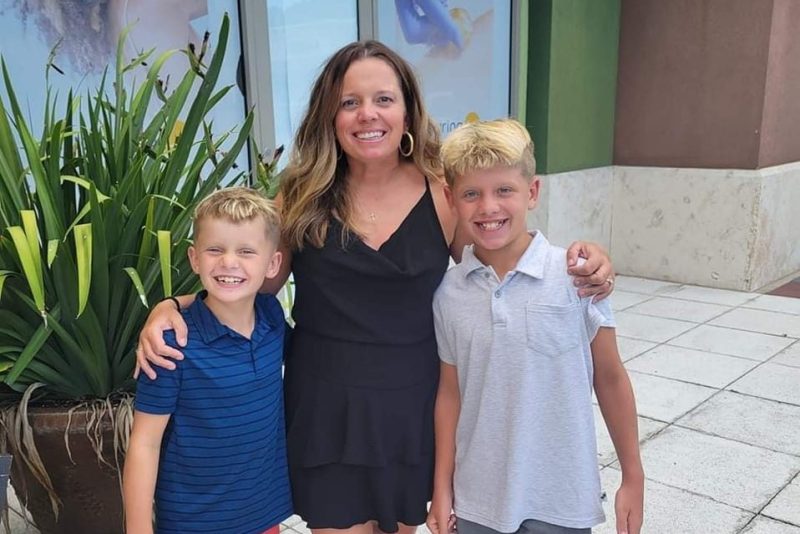
by Cori Berg
Finding out I carry a BRCA2 gene mutation that greatly increases my risk for breast cancer, I made the decision to have a prophylactic bilateral mastectomy. I recognize others have walked different paths with their breasts—fought for them, had children and possibly nursed them. My journey was my own, and at 25, I needed to take action.
Not everyone understands
Not everyone understands that mastectomy removes almost all of the breast tissue, including the milk ducts, making breastfeeding impossible.
Three years after my surgery, when I was pregnant, a woman at a garage sale asked if I had a breast pump. I replied no. She then asked, “You’re going to breastfeed, right?” I explained that I couldn’t. Although the woman wasn’t a healthcare professional, my mom felt compelled to share my entire story, which left me emotionally drained. This might seem trivial to some, but thrift shopping and going to garage sales are special activities for my mom and me. Unfortunately, being confronted with questions about my parenting choices or my inability to do something beyond my control overshadowed what should have been an enjoyable day.
Surprisingly, even some healthcare professionals do not seem to understand that breastfeeding is not an option after mastectomy. On the day of my preventive surgery, the nurse taking me to the operating room asked, “Does this mean you won’t be able to breastfeed?” My heart sank, and I felt tears prick my eyes, the reality washing over me. “Yes. A mastectomy means all of my breast tissue and milk ducts will be removed.” If you are a healthcare professional, I expect more from you. Your patients do, too. Emotional intelligence and competency matter. I expected more from the preoperative nurse wheeling me into the operating room for invasive surgery—she should have known what it involved.
In the postpartum unit after giving birth, I was exhausted and overwhelmed. A nurse asked, “Are you ready to breastfeed?” Dear Lord, help me not yell, “ARE YOU SERIOUS? DID YOU NOT READ MY CHART?” Instead, I calmly said, “No, I can’t; I’ve had a mastectomy.” The shocked look on her face was astounding.
I understand that the situations I encountered were not intentionally malicious but they provided an opportunity for education.
Perspective and acceptance
More positive and practical advice came from my own family. My paternal grandmother had a prophylactic mastectomy 40 years prior. She continually needed biopsies and lost her mother to breast cancer. While she was not the source of my BRCA2 mutation, she was a strong inspiration, providing wisdom beyond measure, telling me: “Dear girl, some mothers have their natural breasts and still can’t breastfeed. If you feel better reducing your risk, then that’s what you must do.”
As my children have grown older, I’ve found it easier to cope with the loss of breastfeeding.
I read an article about a young woman who had a mastectomy and later posted a “No Breastfeeding Zone” sign in her postpartum room with the following poem:
Though breastfeeding is a very special task,
Please be aware before you ask.
Our miracle baby will be formula-fed,
And it will not affect her future ahead.
While I didn’t have a sign, I wished I had. Nearly 11 years later, as the understanding of genetics has evolved, it’s clear that women like me and healthcare professionals deserve postpartum education and support.
Resource
Motherly. (2020, July 9). Why this mama declared her hospital room a no breastfeeding zone.
1 Comments
April 1, 2026
I am a BRCA2 previvor too but fortunately didn’t know about my genetic risk until age 52. As a retired HC professional, I always made myself familiar with a patient’s health history. Unfortunately many do not- either because HIPAA laws block the information, tight time constraints with scheduling or plain laziness. I’ve been asked -more times than I can count-when my last mammogram was by a HC member. Even my PCP initially expected me to get a yearly mammography done! Now if I’m asked -I look at them, so they know I’ve heard them- and I don’t say a thing! It will continue to get better. You’re there to watch your children grow up and that’s what matters.
Betty
Reply