PUBLISHED: 7th July 2026
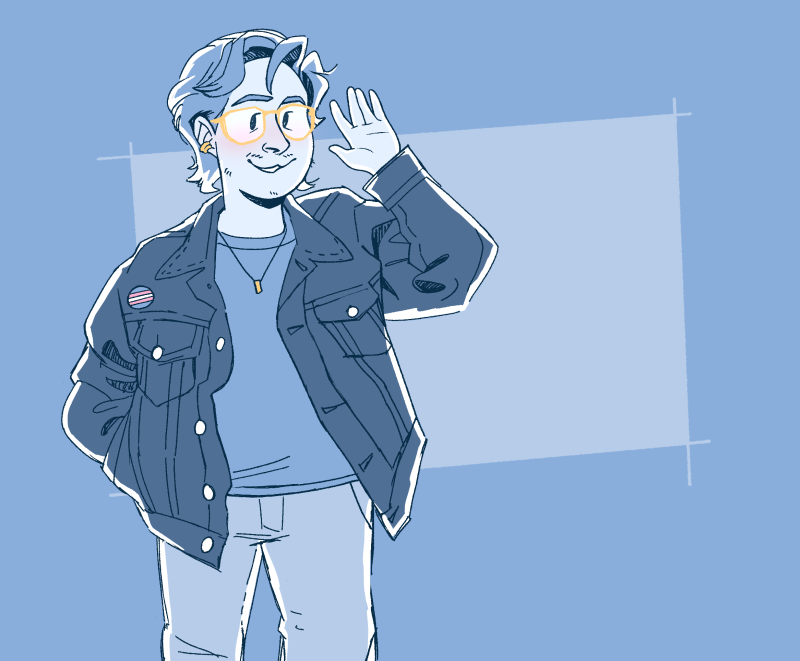
I learned this week that LGBTQ+ people are 25% less likely to seek out preventive cancer screenings. And I can understand why—for years, I was part of that 1-in-4.
My 2017 was a whirlwind: moving to a new apartment, welcoming a new baby and discovering some shocking medical information. When it came to light that a BRCA1 mutation ran in my family, I pursued testing with a genetic counselor and learned that I, too, am affected.
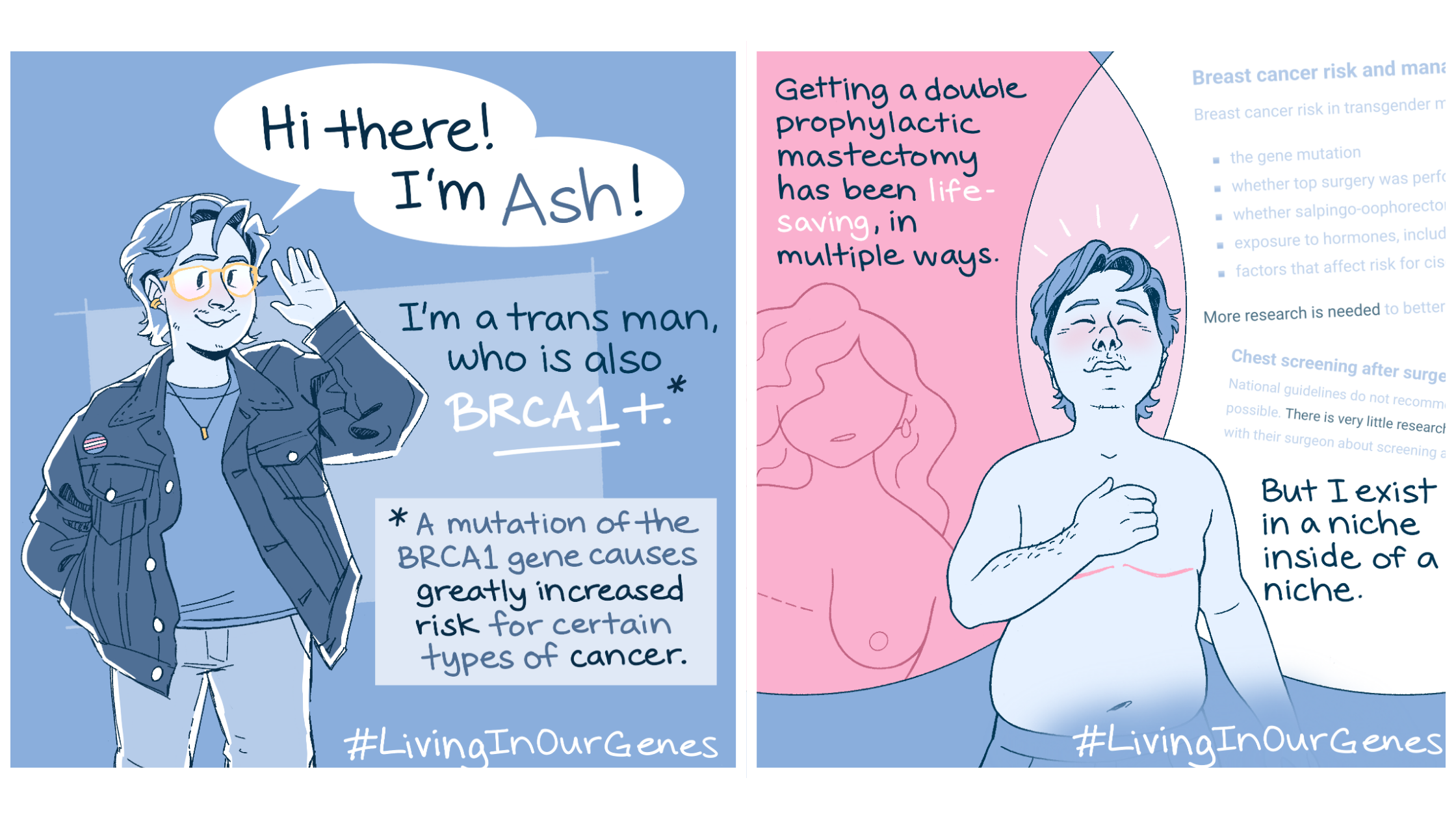
Everything felt upside down and inside out in that moment. Suddenly, I found myself plunged into a world of statistics, timelines, talk of surgery and surveillance, and how this would impact my reproductive options and my kids. The BRCA1 variant within my DNA brings high lifetime risks for breast and ovarian cancers. I was considered to be a "previvor," and advised to monitor myself with routine MRIs and mammograms—if or when cancer did show up, we would catch it early.
I somehow managed to schedule and make it to the first round of imaging, but soon found myself running headlong into unseen barriers. Cost, time, childcare, the emotional burden and the sheer bureaucratic labyrinth of insurance wrangling quickly proved to be insurmountable foes.
And so, the screenings fell by the wayside and were put on the back burner. Something else had come up that felt more pressing for me to deal with: the realization that I'm transmasculine.
It would take several more years for me to overcome the alluring inertia of doing nothing; BRCA1 and cancer risks were still constantly looming, and I sometimes caught myself breaking into a cold sweat about the metaphorical time bombs hanging on my chest. Not to mention, the dread and dysphoria that dragged me down just as heavily whenever I remembered I had breasts at all. I'd become very good at compartmentalizing all of this for later. But eventually, I realized that the treatment for my unsettling sense of gender misalignment and the inevitable possibility of cancer was one and the same. I just had to be brave.
I can't remember a remarkable moment where everything changed, only that things must have lined up just right to make an appointment with another genetic counselor at a different clinic (since we'd moved again and changed insurance providers). She brought up the idea of preventive mastectomy, and because she didn't flinch about my pronouns, I felt safe to discuss my situation from both angles: risk-reducing and gender-affirming. I met with a breast surgeon to talk through my options…and then, I stalled once more. My kids are still too young, I kept reasoning. I wanted the surgery someday, but for now, recovery would be unmanageable.
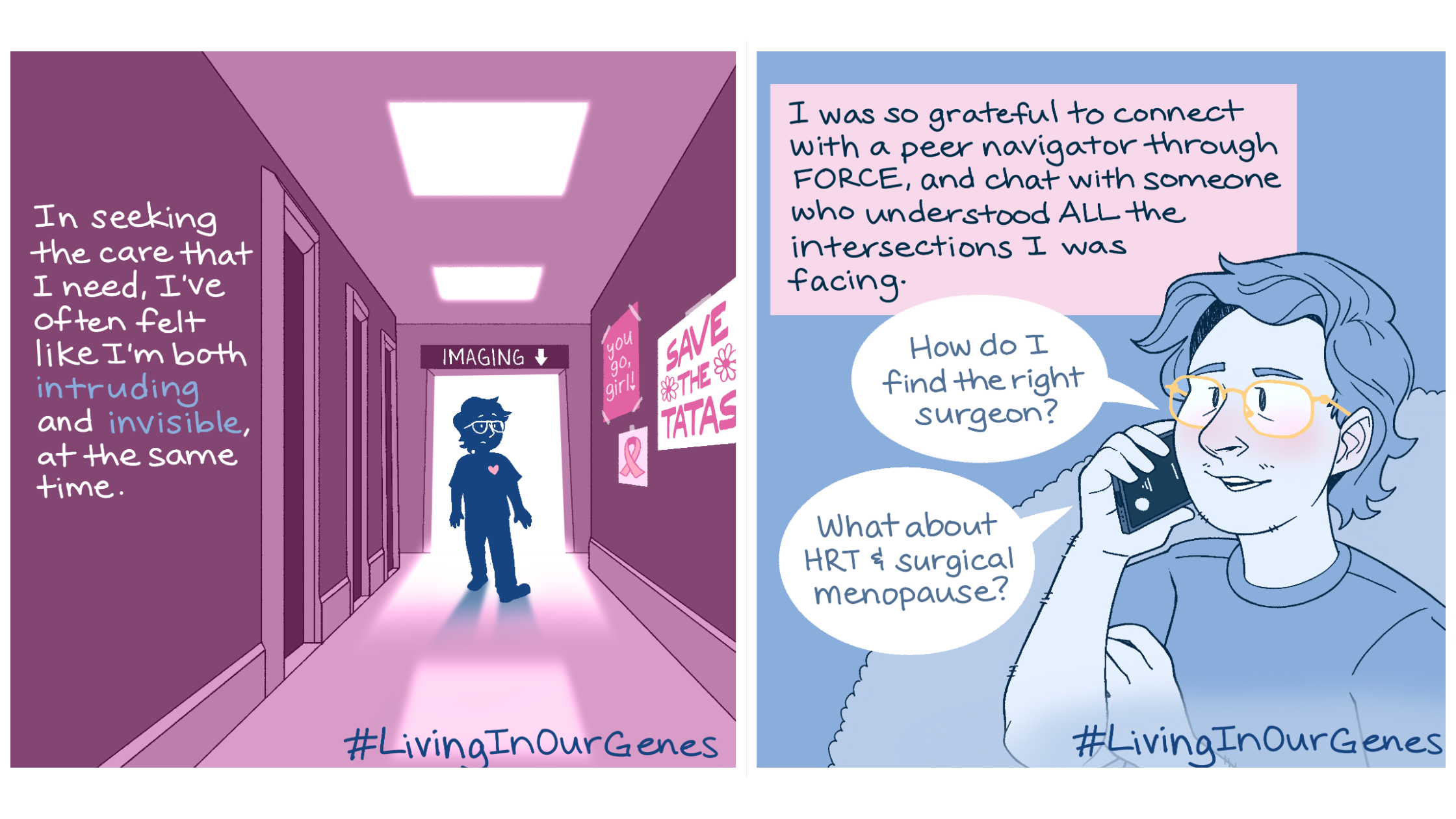
And yet, the idea kept haunting me. Remembering another resource that had been recommended, I set up a time to chat with a peer navigator from FORCE—another queer person with inherited cancer risk. Over the phone, I poured out my concerns and anxieties and asked for advice. Feeling supported was the foothold I needed to finally step over the threshold. I met with my surgeon, and we scheduled a surgery date.
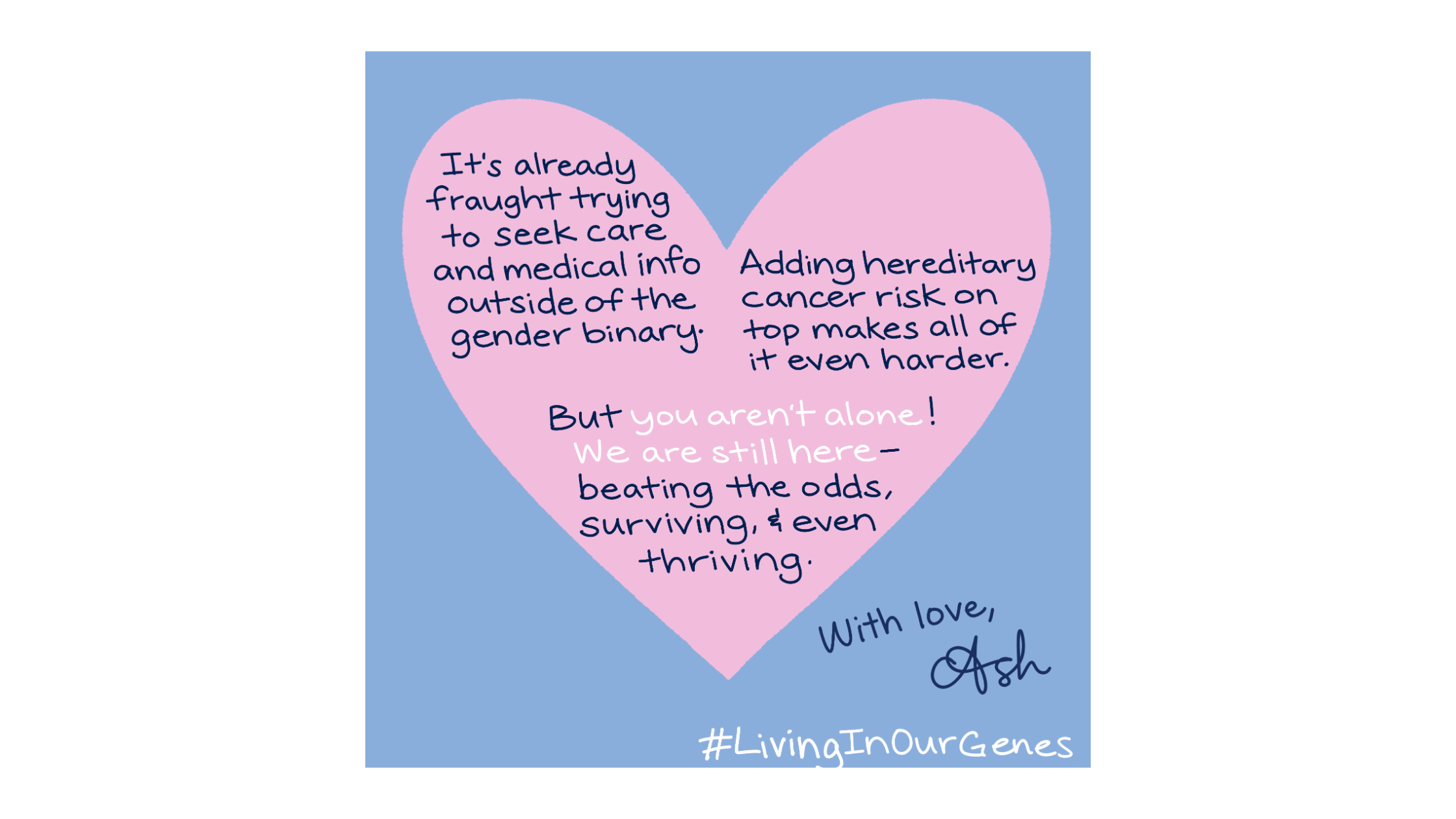
As I write this, it's Pride Month and Men's Health Month, and I am reflecting on these intersections—in the wider world and also within my own body, its surgical history and future. I'm thinking about how we heal: not in isolation, but with (and because of) community and connection. I've only made it this far in both my gender and genetic risk journeys because of others who have either paved their own trails, lighting the way for others to follow, or have lent me a hand as I keep traveling down my own. It's literally lifesaving work to make information and care available and accessible for those of us who live on the margins, and in niches within niches. I'm so thankful that FORCE is a force for good, providing resources and community specifically for queer and trans people facing hereditary cancer. Nobody should ever have to navigate any of this alone.
Included below are a series of drawings I made for FORCE's #LivingInOurGenes series:
Ash Rowan (he/they) is an artist, essayist, birder and poet, living with their spouse and kids in Utah. His writing often centers on the body and what it means to exist in a queer and disabled body. More of Ash's work can be found at https://ashrowan.design.