PUBLISHED: 25th February 2026
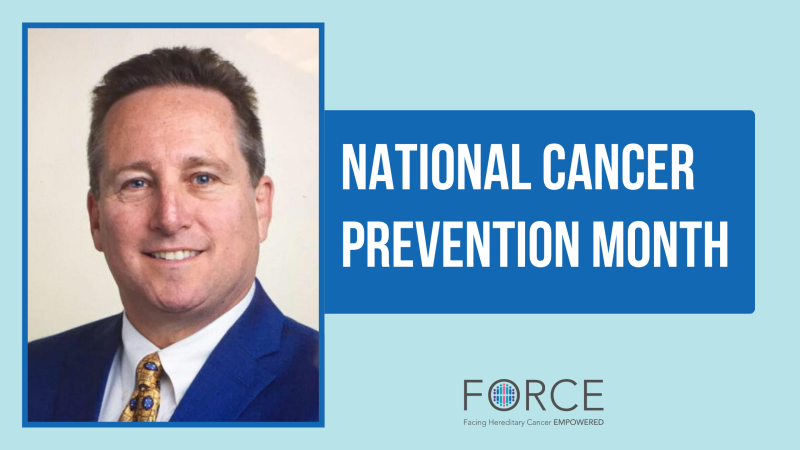
For most of my life, I thought cancer prevention for men was straightforward: don’t smoke, eat a healthy diet and exercise, reduce stress and sun exposure, and get regular medical checkups. I assumed genetic testing for inherited cancer risk was only related to breast and ovarian cancer which I didn’t see as being relevant to me.
My assumptions were way off. Now, during National Cancer Prevention Month, I hope that other men will be able to learn from my experience.
Men, Listen Up!
You have probably heard of the BRCA gene mutation, which significantly increases the risk for breast and ovarian cancer. What you may not have heard, as I came to find out, is that the mutation also increases the risk for prostate and pancreatic cancer as well as malignant melanoma. Perhaps even more surprising, men can get breast cancer.
Like many Ashkenazi Jews, I knew about the BRCA mutation because of its disproportionate impact on us. But it never occurred to me that I could be among the roughly one in 40 people who carry the mutation. I learned this almost by accident, after doing one of the early at-home genetic tests — more out of curiosity about my ancestry than my health.
This gap in awareness about genetic mutations is common among men and extends well beyond BRCA. Across the board, men are less likely to be offered genetic testing, to seek it out, and to act on the results. Most women learn when they are young about the need for regular pelvic exams and mammograms as they get older. Men, on the other hand, generally don’t grow up with clear expectations around routine screenings tied to age or life stages. In my experience, unless men are sick or in pain, we tend not to seek out health care of any kind. But preventing cancer requires us to be far more proactive.
The health care system also contributes to a lack of awareness among men. Even in 2026, most educational materials about hereditary cancer risk still focus exclusively on women. This sends a subtle but consistent message that men don’t need to pay attention.
But we do need to pay attention. Attention leads to knowledge, which leads to power and the opportunity to take action.
Honest Conversations
Of course, knowledge comes with responsibility. Having an inherited gene mutation raises complicated questions, not only about oneself but also about our families and how we use information to fuel action rather than anxiety. For example, carrying the BRCA mutation means there is a 50-50 chance of one’s children, siblings, aunts, uncles, and cousins having one as well. If they want to know their risk, they would have to do genetic testing, too. This requires sensitive conversations that aren't easy. In my experience, this dialogue is not only necessary but, ultimately, extremely valuable.
I’ve heard men discuss feelings of guilt after learning they passed their genetic mutation on to their children. But guilt implies intent, which does not apply here. Genetic mutations are inherited, silently, across generations via simple biology. None of us chose to have a genetic mutation or to pass it on. But we can choose what to do once we know about it.
Fueling Action, Not Anxiety
After adjusting to my “new normal,” I chose to become an advocate for myself and others, especially men. I want men to know about the proactive steps they can take and that we don’t need to be stoic or passive about our health. For example, I take steps such as informing my health care providers about my genetic risk at each health care appointment. I undergo additional and more frequent screenings. I participate in clinical trials and high-risk “previvor” programs geared toward men with the BRCA mutation. Of course, there’s no guarantee that I won’t get cancer. But the steps I’m taking should dramatically improve the odds of finding it early, when treatment is most effective.
There is no one “right” way to handle genetic testing. It’s a personal choice, and what works for me won’t work for everyone. What is universal, though, is that men should be more aware of, and more involved in the conversation around genetic testing.
Knowing that I have a genetic mutation — although certainly a challenge I didn’t anticipate — has had a surprisingly positive impact on my life. It has connected me to a community that empowers me to take positive action. Through organizations like FORCE (Facing Our Risk of Cancer Empowered), I’ve experienced the power of men focusing on our health, our concerns, and cancer prevention both individually and collectively. When men who are newly diagnosed with a genetic mutation realize that they’re not alone, fear often gives way to clarity, confidence, and constructive action. They learn that they are part of a brotherhood of men living full, active lives with a genetic mutation for hereditary cancer.
This is what “living in my genes” (pun intended) means to me: accepting what I can’t change, using the tools available to protect my health, and sharing what I’ve learned so others can make informed choices for themselves.
Cancer prevention isn’t about certainty; it’s about preparation and improving our odds for a long, healthy life. For men, genetic testing needs to have a more prominent place in the conversation. Knowledge and action can, and often does, save lives.
Bradley Hertz is an attorney, husband, father, hereditary cancer previvor and Facing Our Risk of Cancer Empowered volunteer living in Los Angeles.
This op-ed was originally published in the Sacramento Bee.
POSTED IN: Men With Mutations, Genetic Testing, Stories, Decision Making, Previvor
TAGS: BRCA, Genetic Testing, Previvor