PUBLISHED: 30th March 2026
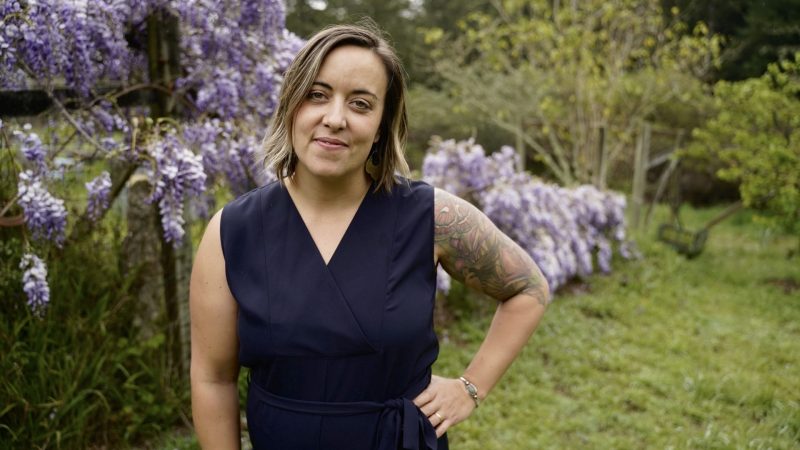
by Sara Champie, LCSW
"I've always thought, from a very young age, I'm probably gonna get that too."
That's how Jennifer described growing up watching her mother fight cancer. It's the part people outside inherited risk often don't understand: for a lot of us, risk doesn't start with a genetic test. It starts earlier, as a formative orientation. The body learns the story before anyone calls it a probability: This could be mine.
Genetic risk isn't just medical information. It lives in memory, in identity and in time.
This matters because inherited risk is not rare. The National Institute of Health estimates that up to 10% of cancers are linked to an inherited gene change. That's millions of people living within timelines shaped not only by medical facts, but by family history and by anticipatory fear that starts long before any test.
The reality of inherited cancer risk is often organized around a medical moment—the appointment where results are explained and a screening plan is outlined. But the emotional experience of risk rarely begins or ends there.
For many people, it has been unfolding for years.
When Jennifer's genetic test results came back, she said, "It hit like a ton of bricks." Not because she didn't understand the information. She did.
But time collapsed. Past, present and future—her mother's illness, Jennifer’s own body, the possibility of the same story repeating—converged in a single moment.
Years later, as Jennifer approached the age when her mother had been diagnosed, something intensified again.
"Forty felt like a ticking time bomb."
Medically, nothing new had happened. Jennifer’s screening plan hadn't changed. To be clear, a parent's age at diagnosis can shape screening recommendations and signal higher inherited risk, but it doesn't create a clock that predicts exactly when, or if, cancer will happen in your body. Even so, Jennifer’s nervous system reacted as if the threat had moved closer.
Time itself had become charged.
This is what I see again and again: The body keeps its own timeline. As people approach milestones connected to family illness, earlier fear and grief come roaring back.
Birthdays. Ages of diagnosis. Milestone appointments. Even routine aches that suddenly feel symbolic.
And when it stirs, people tend to respond in one of three ways.
Some move into control mode, researching obsessively, acting quickly: If I gather enough data, maybe I can outmaneuver the risk.
Others withdraw, delaying appointments, going numb: If I don't engage with it, I won't feel the weight of it.
And then there is a third response: overwhelm from too much agency.
Modern medicine offers options: surveillance, medication, surgery and risk-reducing surgery. Options can be life-saving. But preventive medicine can also place people in positions where agency carries moral weight. Patients are asked to make life-altering decisions based on probabilities while carrying family histories that make those choices feel anything but abstract.
Internally, it can start to sound like:
If I remove a body part and didn't need to, I harmed myself.
If my child carries a mutation I could have prevented, I am a horrible parent.
If I wait to act and develop cancer, it will be my fault.
The fear isn't only of illness. It's of choosing "wrong" and the internal punishment that might follow. And when people are already carrying inherited grief, that pressure can become brutal.
I'm writing this from inside the work, as a somatically oriented psychotherapist specializing in the emotional impact of medical diagnoses and as a BRCA1 carrier who has undergone prophylactic surgeries. I have walked this line between medical information and emotional inheritance.
As Jennifer said, "People don't understand this is a prolonged experience."
She’s right. Inherited risk is not just about the moment you receive results. It's also about enduring the long middle—years of vigilance, decision points and time moving forward, whether you feel ready or not.
The goal isn't to eliminate fear. It's to integrate it so you're not carrying decades of tension alone.
What helps in the long middle
Name what's happening. If anxiety spikes near a milestone age, that doesn't mean you're irrational. It may mean your nervous system is registering time as a trigger of earlier fear and grief. Turn toward those emotions with compassion rather than trying to override them.
Share the weight with people who understand. There is real relief in being around others who know what it's like to live between surveillance and uncertainty. FORCE (Facing Our Risk of Cancer Empowered) has been one of the most meaningful resources in my own experience as a BRCA1 carrier. Their peer navigator program offers confidential one-on-one support from a trained volunteer who has walked a similar path, and their message boards are available around the clock.
Work with a therapist who understands inherited medical risk. Not all anxiety is the same. When risk unfolds across decades, support needs to recognize intergenerational grief, agency overload and time-based reactivation, not just symptom management.
Sara Champie, LCSW, is a somatically oriented psychotherapist specializing in the emotional impact of hereditary cancer, risk, and life after treatment. She is a BRCA1 carrier, and hosts Walking the Genetic Line podcast which highlights the emotional and relational impact of genetic testing. She sees clients in California.