PUBLISHED: 29th June 2026
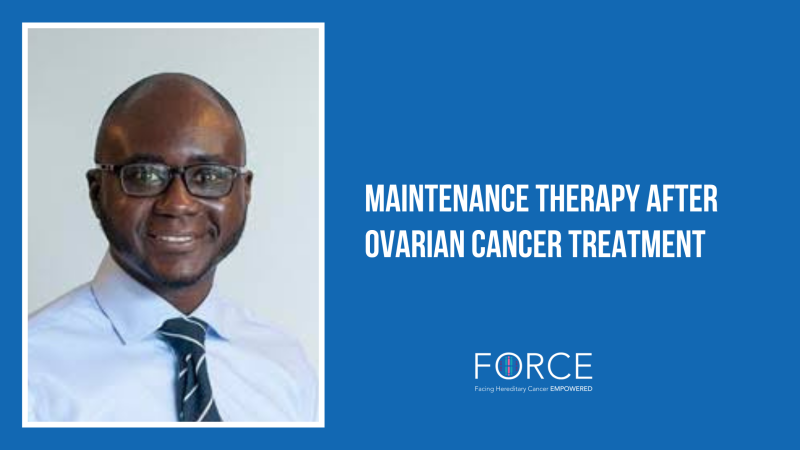
by Oladapo Yeku, MD, PhD, FACP, FASCO
Why maintenance therapy deserves more attention
As a medical oncologist who specializes in gynecologic cancers, I spend a lot of time talking with people who are facing ovarian cancer recurrence. These conversations are never simple. Many patients have already been through surgery, chemotherapy, side effects, uncertainty and the emotional weight of waiting for the next scan or blood test.
When ovarian cancer comes back more than six months after treatment with platinum-based chemotherapy, doctors often describe it as “platinum-sensitive.” In practical terms, this means that the cancer may still respond to another platinum-based chemotherapy treatment. That is important because it gives us another opportunity to control the cancer.
But once that next course of treatment is completed, patients and doctors face another important question: what comes next? Do we stop treatment and observe closely? Do we use an available maintenance therapy? Do we consider a clinical trial? These are the conversations I believe we need to start having earlier and more clearly.
What maintenance therapy means
Maintenance therapy is treatment given after the cancer has stabilized or responded to chemotherapy or other treatment. The goal is to help extend the benefit of that treatment, delay the cancer from growing again, or give a patient more time before needing another round of treatment.
Maintenance therapy is not one-size-fits-all. For some people, observation—taking a break from treatment while being monitored closely—is the right choice. A treatment break can give someone time to recover from side effects, rebuild strength, return to daily routines, and enjoy time away from treatment.
For others, especially people at higher risk of the cancer returning again, maintenance therapy may be worth discussing. Historically, the options in recurrent, platinum-sensitive ovarian cancer have been limited. Bevacizumab, also known as Avastin, has been one option for some patients. PARP inhibitors have also changed care for many people with BRCA mutations and some people with HRD-positive tumors.
Why we need more options
As important as these advances have been, they do not help every patient. Some people do not have a BRCA mutation or an HRD-positive tumor. Some have already received a PARP inhibitor earlier in treatment. Others may have side effects or other health concerns that make bevacizumab less appealing. This is why I believe expanding maintenance options is so important, particularly for people considering second- or third-line treatment decisions.
Researchers are now studying new maintenance approaches, including immunotherapy, vaccines, antibody-drug conjugates and other strategies. One example is a clinical trial listed in FORCE’s Search & Enroll tool that is testing COM701 as maintenance treatment after platinum chemotherapy for ovarian cancer that has come back. COM701 is an investigational immunotherapy called an immune checkpoint inhibitor. Checkpoint inhibitors are designed to release one of the “brakes” that can keep immune cells from attacking cancer. COM701 targets a checkpoint called PVRIG, which is found on certain immune cells. By blocking PVRIG, researchers hope COM701 may help T cells and natural killer cells stay more active against cancer cells. COM701 is not yet approved for ovarian cancer and is being studied in a clinical trial to see whether it can help delay cancer growth after a person has completed platinum-based chemotherapy and benefited from treatment.
We have already seen checkpoint inhibitors become part of treatment for several other cancers. For example, pembrolizumab, a checkpoint inhibitor that targets PD-1, is used with chemotherapy for some people with platinum-resistant ovarian cancer. In endometrial cancer, checkpoint inhibitors such as pembrolizumab, dostarlimab and durvalumab are used with chemotherapy for certain people with advanced or recurrent disease. Those successes do not automatically mean the same approach will work in platinum-sensitive ovarian cancer, but they do motivate us to continue asking whether other immune pathways, such as PVRIG, or other types of drugs may be useful, especially in settings where patients need more maintenance options.
For me, the question behind these studies is very practical: after chemotherapy has helped, is there something else that may help maintain that benefit? That question matters to patients because it is about time—time without the cancer growing, time before more chemotherapy may be needed, and time with the best possible quality of life.
It is also important to understand that a maintenance study is different from a trial that treats an active recurrence right away. In a maintenance study, timing matters. Patients generally need to complete their planned chemotherapy first, show that the cancer has responded or remained controlled, and then consider whether a maintenance option may be appropriate within the study’s enrollment window.
Start the conversation before chemotherapy ends
One of the most important points I try to make with patients and clinicians is that maintenance therapy should not first come up on the day chemotherapy ends. When someone is starting treatment for a platinum-sensitive recurrence, that is often the right time to begin looking at the big picture. What is the goal of the patient? What is the goal of this treatment? What happens if the scans look good? Is observation reasonable? Should we be thinking about bevacizumab, another available option, or a clinical trial?
Clinical trials have changed how we manage ovarian cancer in the platinum-resistant setting, and we are now asking important questions about how we can bring some of these innovations to patients with platinum-sensitive disease. Conversations about treatment and clinical trials take time. Patients may be overwhelmed by side effects, scans, appointments, financial considerations, travel and logistical constraints, and family concerns. Doctors may be busy and may be managing many different trials at once. That is why plain-language information and simple tools can be so helpful. A short handout, a separate “strategy” visit, or even a virtual visit with family members present can give patients space to understand their options before decisions need to be made.
Questions I encourage patients to ask
- After this chemotherapy is finished, what is the plan?
- Am I a candidate for maintenance therapy?
- Would observation be reasonable for me?
- Are there maintenance clinical trials I should know about?
- Do I need biomarker testing to know which options may apply to me?
- If I am looking at a maintenance clinical trial, do I need to complete platinum chemotherapy first and show that it helped?
- Is there a specific time window when I would need to decide?
- Are there any available, trusted materials I can take home to read and discuss with my support network?
- Should I consider a consultation at an academic center or trial site before chemotherapy ends?
The bottom line
Ovarian cancer treatment has improved, but we still have work to do. Maintenance therapy is one area where the field is evolving, and where more options could make a meaningful difference for patients. Not every patient will choose maintenance therapy. Standard-of-care options may be the most appropriate for some patients. Not every patient will want or qualify for a clinical trial, and in fact, observation may be the best choice for some people. But every patient deserves to know what options may exist, what questions to ask and when those decisions need to be made.
My hope is that more patients, families, and clinicians will begin having these conversations earlier during the treatment course. The goal is not to push every person toward a trial or a treatment. The goal is to make sure people have the information they need to make the decision that is right for them.
Oladapo Yeku, MD, PhD, FACP, FASCO, is a medical oncologist and researcher at Mass General Brigham Cancer Institute who cares for people with ovarian, endometrial, and other gynecologic cancers. His work focuses on improving treatment options for gynecologic cancers, including immunotherapy, targeted therapy and clinical trials.